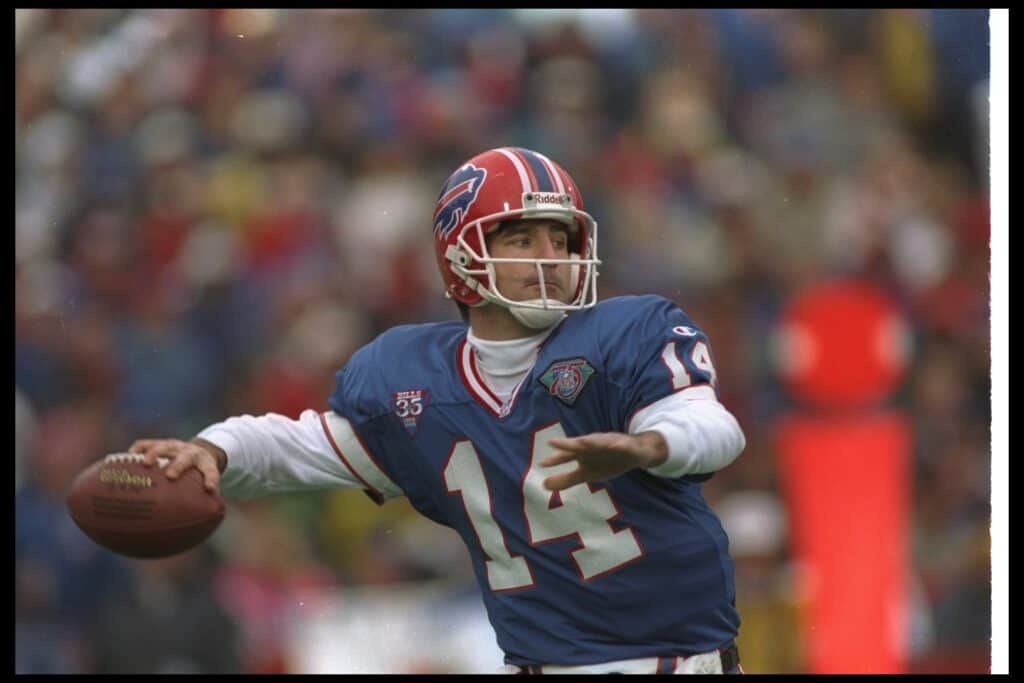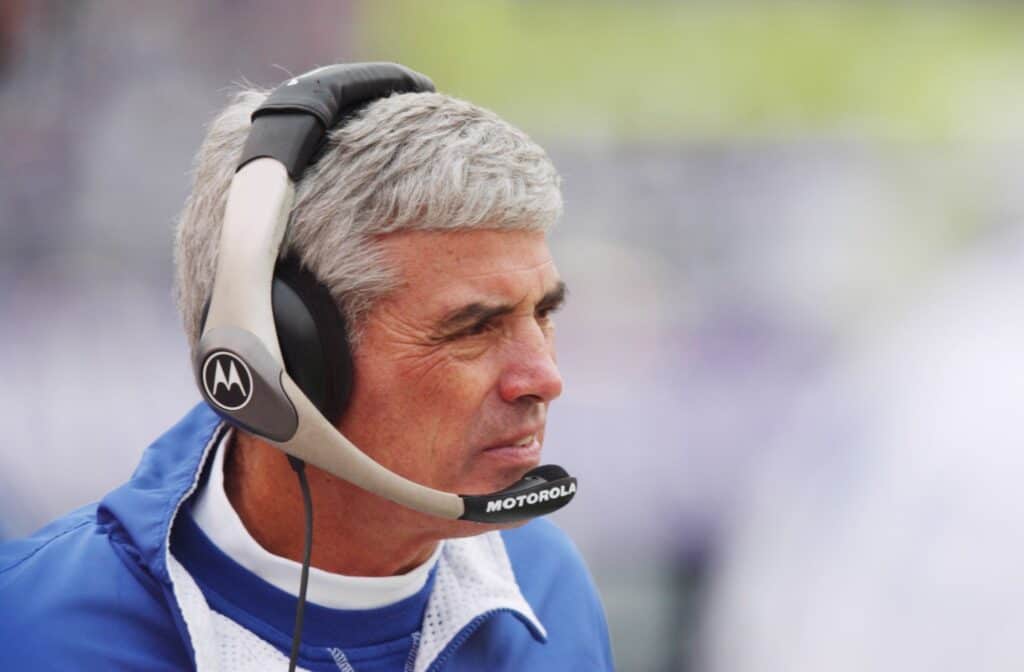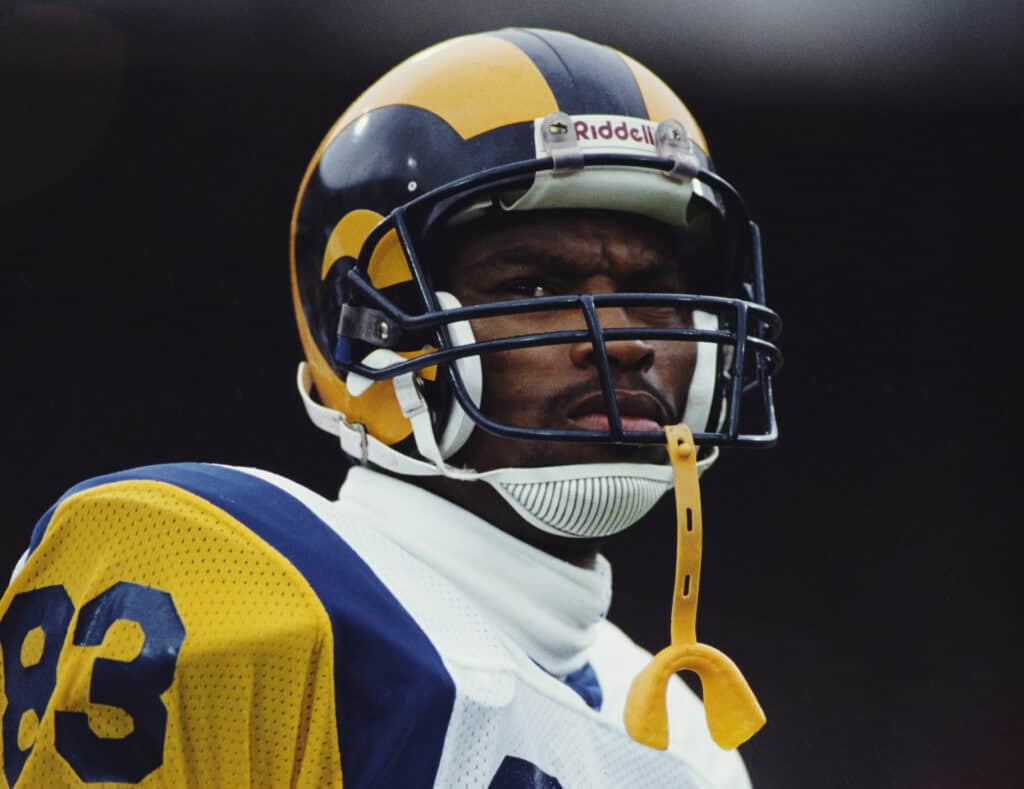
Although it’s not considered a football factory, Portland State University is responsible for significant contributions to the sport.
A number of coaches, including Jerry Glanville, June Jones, and “Mouse” Davis, have led the Vikings with their prolific passing offense, which has filtered to the NFL.
Neil Lomax was one of the quarterbacks who ran the PSU offense from 1977-1980.
While in college, Lomax went from fifth-string to superstar in short order.
As the signal-caller for Davis’s run-and-shoot offense, Lomax set no less than 90 NCAA records during his Vikings’ tenure.
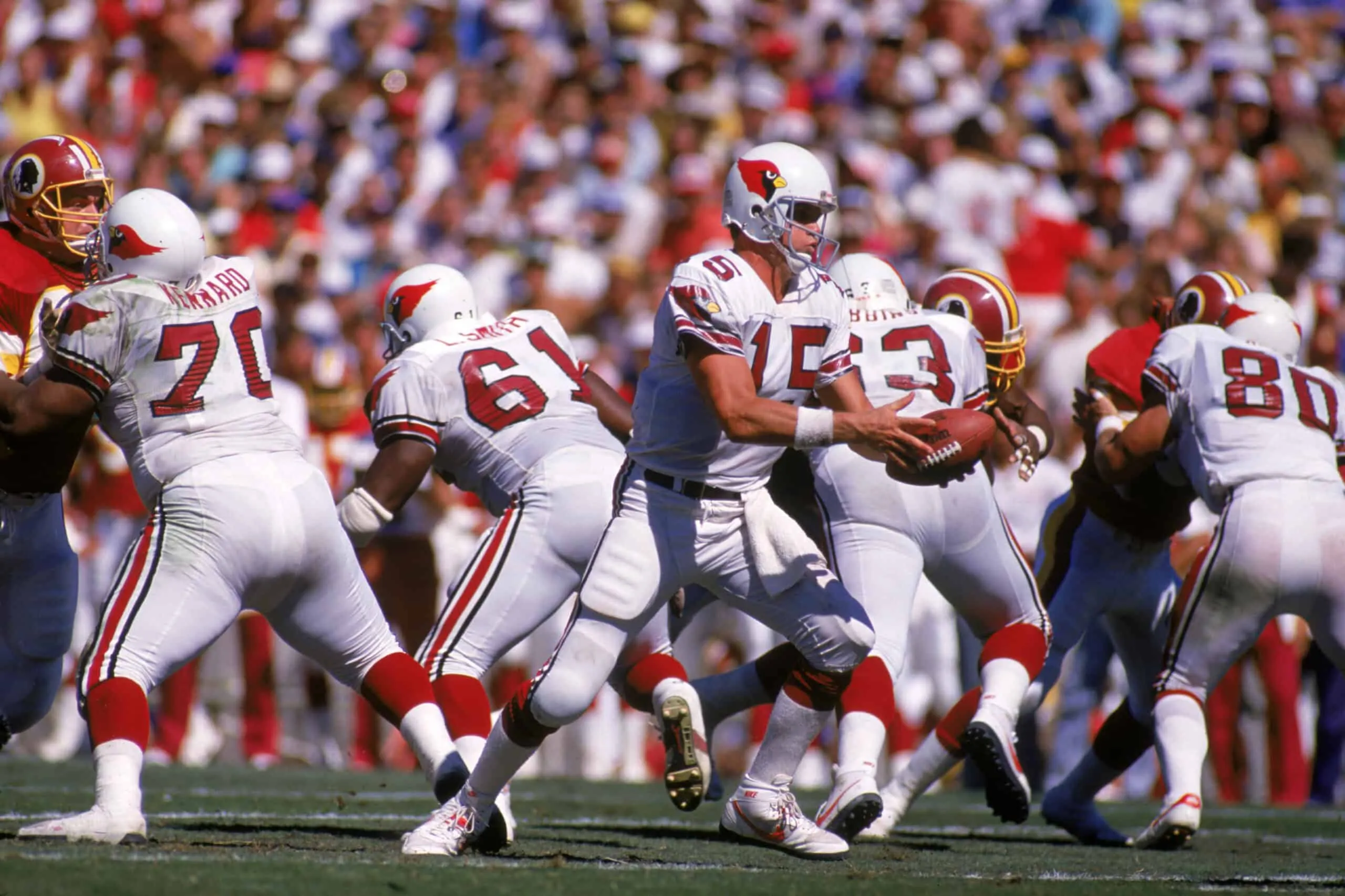
Neil Lomax wearing the only correct Cardinals uniform.
Played QB for the St. Louis/Phoenix Cardinals 1981-89
2-time Pro Bowler
Second round pick out of Portland State. He threw 7 TD passes in one quarter against Delaware State in their 105-0 victory. pic.twitter.com/uB1AqJBBgE— Cool Old Sports (@CoolOldSports) September 17, 2024
After the St. Louis Cardinals drafted him in the second round of the 1981 NFL Draft, Lomax continued his free-wheeling, gun-slinging ways for eight seasons.
His leadership on the gridiron helped the Cards make the playoffs in 1982 after a six-year absence.
Following his early retirement in 1990 due to a hip injury, Lomax stayed in football as a high school and college coach.
This is the story of Neil Lomax.
The Swimmer Who Became a Football Player

Neil Vincent Lomax was born on February 17, 1959, in Lake Oswego, Oregon.
Happy Birthday Neil Lomax#Cardinals
pic.twitter.com/crNIvoMGk9— Old Time Football 🏈 (@Ol_TimeFootball) February 17, 2024
By the time he was six years old, it looked like Lomax’s future might be in swimming.
His mother was a good swimmer and encouraged her son to get in the pool early and often.
“I wanted Neil to be a swimmer,” Carol Lomax said, “and when he was six years old he broke Don Schollander’s park pool record in a 25-yard race. Don himself was there to give him his ribbon.”
The record-breaking event was neat, but young Neil didn’t intend to continue in the sport.
“He shook my hand,” said Neil, “and that was my last taste of the lake.”
“Neil saw that swimmers had to get up at six to work out before school,” said his father, Dave Lomax, “and he said, ‘No way.'”
After leaving the pool behind, Lomax spent the next few years trying his hand at baseball, basketball and football.
#OPreps Pro Athlete Spotlight 🏈
Neil Lomax, Lake Oswego Lakers – Lake Oswego, OR#NFL #NWSW @psuviksFB @LOLakersFB pic.twitter.com/FoU3316MTR
— NW/SW 🔭 (@NWSportsWatch) July 5, 2022
Then, when he reached Lake Oswego High School, fate put Lomax in the position that would become his future.
“But my freshman year at Lake Oswego High, I was too slow to be a running back and too small for the line positions,” said Lomax. “So the coaches asked him a fateful question: “Can you throw the ball?”
His response was answered in the affirmative for the next four years.
“I did well enough to start on the freshman team, then made jayvee as a soph and quarterbacked the varsity my last two years,” Neil said in 1981.
The only problem was, the Lakers football team ran the Power I offense, meaning Lomax received scant opportunities to throw the ball.
“We ran the ball a lot. My whole senior year I only threw for seven touchdowns.”
Bench Warmer at Portland State
Because he threw so little in high school, Lomax was not recruited to play for any colleges.
Then-head coach Darrel “Mouse” Davis at nearby Portland State University came to see the quarterback at a prep game but left less than impressed.
However, a few months later, Davis returned to Lake Oswego when another quarterback recruit of his committed elsewhere.
The coach offered Lomax a partial scholarship, and he accepted without expectation that he would soon become one of the best quarterbacks in college football.
“I was very fortunate. No one goes there [to Portland State] saying they’re going to be an NFL player,” said Lomax years later. “It was, ‘Let’s have some fun, get an education, get on the bus to Missoula [Montana] or Cheney [Washington] and play some football.’”
During his freshman season in 1977, Lomax was buried on the depth chart as the fifth-string QB.
Two months later, he had moved up to second string and then first string after an injury to the Vikings’ starter.
“Someone’s broken leg here, someone else’s mistake there,” said Dave Lomax, “and all of a sudden he was playing. It came so suddenly.”
The 6’3, 200-pound, lanky kid from down the road was thrust into Mouse Davis’s run-and-shoot offense, a system known for a plethora of passing.
Congratulations to decorated PSU grad, illustrious @NFL QB, @FVHS_CIS coach and all-around nice guy Neil Lomax, this year's #SimonBenson18 Honoree for Alumni Achievement. Neil might be singlehandedly responsible for putting Viking Athletics on the map! https://t.co/23wix0xfFT pic.twitter.com/DRbOj91W1n
— Portland State University (@Portland_State) October 26, 2018
Lomax thrived in the system, and in only four games, passed for 1,411 yards, 18 touchdowns and five interceptions.
In the final game of the year, Lomax waxed Montana State with 469 yards and six touchdowns.
“I was astounded at myself,” he said. “I mean, I knew I could compete. I always felt I could strike out a guy or complete a pass. I always wanted to be the dominant, the take-charge kind of guy….”
Making a Name for Himself
Before the 1978 football season, PSU went from Division II to Division I-AA.
With Lomax under center, there weren’t a lot of issues with the increased strength of schedule.
Although the Vikings went 5-6 in ‘78, Lomax passed early and often and PSU scored a lot of points including 63 against Sacramento State on September 30.
At season’s end, Lomax had thrown for 3,506 yards, 26 touchdowns and 22 picks and earned a first-team Division I-AA All-American nod.
Neil Lomax, Portland State pic.twitter.com/SxaM8MAJqN
— Adam Hazel (@AJH97470) September 24, 2019
He also led the entire country in total offense and led the nation in passing.
In 1979, Lomax led the nation in total offense again with 3,950 yards, 26 touchdowns and 16 interceptions and was chosen as a third-team FCS All-American.
Furthermore, he was named Oregon Athlete of the Year and PSU’s MVP.
Portland State went 6-5 and blistered the University of Puget Sound on October 6 with 72 points.
Scoring Points in Bunches in 1980
Lomax’s senior season in 1980 would be one for the record books.
As the Vikings went 8-3, Lomax was voted a team captain and commenced to re-write the NCAA and school record books.
On October 25, PSU hosted Cal Poly Pomona and put up an astounding 93 points.
The score made national headlines.
College Football Legends: Neil Lomax
Lomax went from a backup QB on a partial scholarship to Portland State legend from 1977-1980. In his career he threw for 106 TDs on 13,220 yds. He also had 938 completions, twenty eight 300-yd passing games and ten 400-yd passing games. pic.twitter.com/ehIGZOpKRR
— The Get Back Coach (@TheGBCoach) May 4, 2023
Then, on November 8, Lomax and the program made the national highlights again after hanging 105 points against Delaware State.
In the first quarter alone, Lomax passed for seven touchdowns and was shut down for the rest of the game by halftime.
His touchdown total remains an FCS record for one quarter and is still tied for an FCS record for the number of touchdown passes thrown by a QB in a single half.
“Delaware State played a press defense the whole game,” tight end Clint Didier remembered in 2022, “so all we had to do was get by them and we were gone. It was just not a good defense for a Run ‘N’ Shoot.”
The final score became a debate among college football media about when to call off the dogs.
“Afterward do you feel sorry for the team you beat?” Lomax asked. “Our job was to execute [a singularly appropriate word under the circumstances]. We were pleased to be doing our jobs. But later it seemed a joke. It hurt both teams. It was hard to take questions like ‘What were they, a school for the blind?’”
College Record Breaker
Lomax’s final college game on November 22 was another blowout, this time a 75-0 rout of Weber State.
As a senior, he passed for 4,094 yards, 37 touchdowns and 12 picks.
Former Cardinals QB Neil Lomax at Portland State in 1980. pic.twitter.com/igDJb5v1LM
— St. Louis Football Cardinals (@BigRed_STL) January 21, 2024
Lomax was again named the Oregon Athlete of the Year and PSU MVP, was recognized as a first-team FCS All-American and even finished seventh in the Heisman Trophy balloting.
For the third consecutive year, he led the nation in total offense and even took home MVP honors in the Senior Bowl showcase after the season.
During his college career, Lomax passed for 13,220 yards, 13,345 yards of total offense, 106 touchdowns and 55 interceptions, all of which are PSU records.
Additionally, Lomax set 90 NCAA records and had 10 400-yard passing games and 28 300-yard passing games.
He was inducted into the Oregon Sports Hall of Fame in 1993 and the College Football Hall of Fame in 1996.
In 1997, Lomax was inducted into the PSU Hall of Fame and his #11 was retired by the program.
Lomax Drops in the 1981 NFL Draft
After the 1980 college football season ended, Lomax was projected as a first-round pick in the upcoming 1981 NFL Draft.
However, a poor showing in the East-West All-Star game made pro scouts second-guess his draft status.
“That game cost Lomax a lot of money,” said an NFL scout. “In three hours he projected himself from possibly the No. 1 player in the whole draft to a high-to-middle second round.”
An MVP performance in the Senior Bowl playing for then-San Francisco 49ers coach Bill Walsh didn’t really help Lomax’s cause, although Walsh himself was a believer.
“If you’re talking about potential,” Walsh said, “Lomax is unlimited. He’s big and active. He has a fine arm, the strongest arm in the entire draft, bar none. He’s intelligent, a good kid to work with.”
Several teams showed interest in Lomax but all he wanted to do was play ball.
“I won’t get Dallas, I don’t think,” he said before the draft. “Green Bay and Denver have called a lot. I’m hoping for somewhere on the Coast, but it might be St. Louis or New York. I’m just looking for the opportunity to play until I can’t play anymore.”
When it came time for the event, Cal’s Rich Campbell was the only signal-caller taken in the first round (by the Packers).
@CoachLo15 1981 NFL draft 2nd Day April 29th
With the 33rd Overall Pick the St. Louis Cardinals Selected Neil Vincent Lomax QB Portland State- College Football Hall of Fame pic.twitter.com/ABFIXPl7DT— Timothy C. Kulla (@TCKooo) April 30, 2020
The next quarterback off the board was Lomax when the St. Louis Cardinals took him with the 33rd overall pick in the second round.
“He could have been angry, vitriolic, but he exhibited the most maturity, patience and understanding. He handled it beautifully. There were probably 20 stories I read why Lomax didn’t go in the first round, yet he handled the scrutiny with grace and dignity,” said his attorney, Leigh Steinberg.
Slow but Sure Progress

After making the playoff in 1975, the Cardinals won 10 games (but missed the postseason) in 1976 and then could win no more than seven games between 1977 and 1980.
When Lomax joined the club, the organization had solid players in starting quarterback Jim Hart, running back Ottis Anderson, and receivers Roy Green and Mel Gray.
Hart had been with the franchise since 1966 and was on the back end of his career.
Lomax Throws First Touchdown
September 13, 1981: Rookie QB Neil Lomax threw his first career TD pass, a 62-yarder to Willard Harrell, in a 30-17 loss to the Dallas Cowboys.
Lomax completed 14-41 passes for 295 yards with a TD and two INTs in his first NFL start.#BigRed1980s pic.twitter.com/pXTA0z7U3G
— St. Louis Football Cardinals (@BigRed_STL) September 13, 2024
After starting the first nine games of the season, head coach Jim Hanifan pulled Hart in favor of Lomax.
“When I made the decision (to start Neil)… It was extremely difficult in one respect and easy in another. I slept on it Sunday night, thought about it on Monday and Monday night. Then I came in on Tuesday and said to the offensive staff, ‘We’re going with Neil this week.’ … I didn’t feel I was hurting the team with this move. I felt just the opposite – that I was helping the team because basically this is a young team,” said Hanifan.
The rookie ended his season with seven starts, 1,575 yards, four touchdowns and 10 interceptions and he won over many of the Cardinals’ veterans.
“Neil’s handled the Hart situation very well,” guard Dan Dierdorf observed. ”He knew Jim was a personal friend of many of the players and he knew he hadn’t won the job on a talent basis. It was a tough situation for both of them, but Neil’s been humble and self-conscious of what he has to say.”
Before the 1982 strike-shortened season began, Hanifan went with Lomax as his starter even though Hart was still on the roster.
”What Neil Lomax has,” Hanifan said, ”is a lot of confidence in his ability. His confidence radiates to everybody else – to his teammates, to anybody else who comes in contact with him. It isn’t an arrogance either. It’s a feeling you get that this guy is a confident young man. He demonstrates that on and off the field.”
During the nine-game season, Lomax passed for 1,367 yards, five touchdowns and six picks and led the NFL with a 2.9 interception percentage.
The Cards’ 5-4 record was good enough to qualify for the league’s unique playoff format, but the team lost to Green Bay in the first round, 41-16.
Lomax threw for 385 yards and two touchdowns during the contest.
Neil Lomax (1983) pic.twitter.com/VnKYo1V6sx
— Tecmo Super Bull (@TecmoSuperBull) April 8, 2024
In 1983, St. Louis started 0-3 before Lomax led his teammates to an 8-7-1 overall record.
His stats that year included 2,636 yards, 24 touchdowns and 11 interceptions.
Pro Bowl

A season later, the Cards began 2-3 before Lomax spearheaded a four-game winning streak.
The team then split its remaining six games in 1984 before playing the Washington Redskins in the final game with a playoff berth at stake.
Unfortunately, a missed field goal led to a close 29-27 loss which also meant a missed trip to the postseason with a 9-7 record.
Neil Lomax had a great game on a cold, wet December day at RFK stadium.
The Cardinals missed a FG as time expired and lost 29-27 in a week 16 showdown against the Redskins for the NFC East division crown. pic.twitter.com/KyYZ5Upmi3
— FB_Helmet_Guy (@FB_Helmet_Guy) March 28, 2024
Despite missing out on a chance to advance to a Super Bowl, Lomax had a fantastic year.
His 4,614 yards, 61.6 completion percentage, 28 touchdowns, 184 rushing yards and three rushing scores were all career highs.
Those stats got the quarterback selected for his first Pro Bowl.
NFL Passing Yards Leader
In 1985, the Cards won their first two games including a 41-27 victory against the Cincinnati Bengals in Week 2.
“We blitzed Lomax all game. We were right on him. But he moved well,” said Bengals head coach Sam Wyche.
St. Louis then dropped four of its next five and had just two victories in November and December combined to finish 5-11.
O’Donoghue wins it in OT!
September 8, 1985
The Cardinals blew a 17-3 fourth quarter lead, but drove 63 yards in the final 38 seconds concluding with a Neil Lomax to Pat Tilley game tying TD with 4 seconds remaining.
Neil O'Donoghue's 35 yard FG won it in OT.#BigRed1980s pic.twitter.com/oh5tAouSyF
— St. Louis Football Cardinals (@BigRed_STL) September 8, 2024
Lomax had 3,214 yards and 18 touchdowns that season and 2,583 yards and 13 scores in 1986 when St. Louis dipped to 4-11 under first-year head coach Gene Stallings.
Then, in 1987, the Cards improved to 7-8 (strike-shortened season) while Lomax led the NFL with 463 pass attempts, 275 completions, and 3,387 yards along with 24 touchdowns and 12 picks.
He was named to his second Pro Bowl after the year.
Arthritis Leads to Lomax’s Retirement

Not long after the ‘87 season concluded, the franchise relocated to Phoenix, Arizona.
“I’m excited about making the change. … There’s no question this will make us a better football team. We’ll have better facilities out there, better support, … There were times in St. Louis when we’ve felt like second-class citizens. We won’t have to apologize anymore because we don’t play baseball,” said Lomax.
During the Cards’ first year in the desert, Lomax passed for 3,395 yards, 20 touchdowns and 11 interceptions.
Graphics of some more former Cardinals: Neil Lomax, Roy Jet Stream Green and Dan Dierdorf! pic.twitter.com/bT2qnzuUUP
— Robert Freedman (@RobOfAZBirdGang) June 24, 2024
The team started the year with a 7-4 record that included a huge victory over division rival San Francisco.
At one point during the game, Phoenix trailed 23-0 and the home crowd started to leave in the third quarter.
However, a furious comeback led to a 24-23 win.
OTD 1988#Cardinals #49ers
Neil Lomax to Roy Green with :03 remaining on the 🕰️
24-23 #BirdGang
pic.twitter.com/WzsFRV94lR— Old Time Football 🏈 (@Ol_TimeFootball) November 6, 2024
Then, after another victory a week later, the Cards lost their final five games to finish 7-9.
“We’re talking about the 49ers game, and there must’ve been 200,000 people there because I’ve had more than 200,000 people tell me they were there,” Lomax said. “When I go back down (to Phoenix) even now, 34 years later, they bring that up. The fans loved us. I just feel sorry we didn’t finish that off getting to the playoffs.”
In the following offseason, Lomax was diagnosed with a severely arthritic hip and it was announced that he would miss all of the 1989 season.
As a precaution, the organization took Washington State University quarterback Timm Rosenbach in the NFL Supplemental Draft that spring.
After missing 1989, Lomax retired before the 1990 season when it became clear that his hip condition would not improve.
“I didn’t want to be a burden,” Lomax said, referring to the degenerative arthritic condition that first showed up about four years ago.
During his eight-year NFL career, Lomax passed for 22,771 yards, 136 touchdowns, 90 interceptions and rushed for 969 yards and 10 scores.
NFL fun fact. Neil Lomax was 2nd in passer rating in NFL history when he retired. pic.twitter.com/Vhd4rqE2NM
— FB_Helmet_Guy (@FB_Helmet_Guy) February 12, 2022
He was a PFWA All-Rookie Team member in 1981, a two-time Pro Bowler and NFL passing yards leader once.
Life After the NFL

After his life as an NFL quarterback ended, Lomax remained in the sports world.
He was the president of a sports promotion firm called Pro-Max Event Management and was the head coach at Fort Vancouver High School in Vancouver, Washington for two years.
In the summer of 2021, Lomax became the quarterbacks coach at George Fox University in Oregon, a job he continued to hold through 2023.
“It’s a joy and privilege at this stage of my life to work with young men who truly care about their future, their teammates, their faith, their journey,” Lomax said. “They’re just using football to grow and learn in these areas, because, when you get right down to it, football is just an activity, a sport. It’s not their identity. It’s not who they are. I just love working with ’em. They’re like sons to me.”
References
https://www.pro-football-reference.com/players/L/LomaNe00.htm
https://goviks.com/hof.aspx?hof=34
https://www.oregonencyclopedia.org/articles/lomax_neil_1959_/
https://www.cfbhall.com/inductees/neil-lomax-1996
https://www.profootballresearchers.org
https://footballfoundation.org/hof_search.aspx?hof=1975
https://goviks.com/sports/2011/2/23/athletics_0223110859.aspx?id=78
https://vault.si.com/vault/1985/09/23/the-chemistry-is-just-right
NEXT: The Life And Career Of Jim Hart (Story)