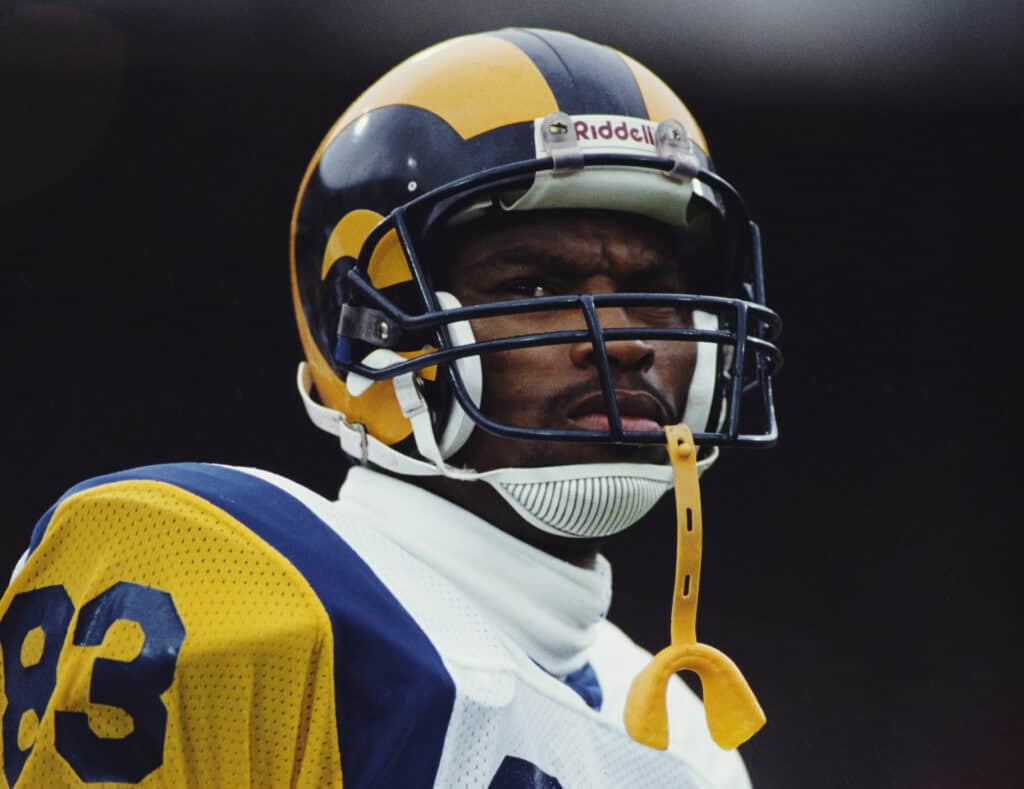
There’s little doubt that, if Bart Starr played college football today, he wouldn’t be a starter.
He also wouldn’t have been drafted by the NFL and would have been lost to history.
Actually, that’s almost what happened in the first place.
After passing for only 1,903 yards, 10 touchdowns and a ghastly 20 interceptions at Alabama, Starr was inexplicably drafted on a whim in 1956.
However, the Green Bay Packers didn’t grab him until the 17th round and he wasn’t expected to do much.
It took a few years, but Starr took his destiny into his own hands and became legendary.
Bart was a true gentleman, a great player and a great pioneer for the NFL. He set a tremendous example for all QBs to emulate.
My thoughts are with Bart’s wife, Cherry, and the entire Starr family. #Legend pic.twitter.com/TaXXCqVN18
— John Elway (@johnelway) May 26, 2019
By 1961 he was Green Bay’s full-time starter and his ascendency that year coincided with an NFL championship.
Two more championships followed before the franchise won the first two Super Bowls with Starr under center.
He would continue to play through the 1971 season before retiring.
Starr then coached and lived a life filled with charity work and helping troubled youth before passing away in 2019.
This is the story of Bart Starr.
Rocky Upbringing
Bryan Bartlett “Bart” Starr was born on January 9, 1934, in Montgomery, Alabama.
Happy Birthday to the late Bart Starr, out of Montgomery, Alabama & @AlabamaFTBL 6’1 197; 17th Round Draft Pick 1956 ( 200th overall) 16 year @NFL career all with the @packers ; 2X @SuperBowl Champion, 2X @SuperBowl MVP, 5X @NFL Champion, @NFL MVP 1966, 1st Team All Pro 1966, 3X… pic.twitter.com/BWyBG0o4C4
— Larry in Missouri (@LarryInMissouri) January 9, 2025
He was raised under the stern eye of his father, Benjamin Starr, who was a master sergeant in the Air Force.
Although he was a shy kid, Bart Starr was a competitor and showed it on the gridiron in middle school.
Then, a pair of setbacks almost derailed his athletic career.
When he was 13, Starr’s younger brother, Hilton “Bubba” Starr, was playing in the yard when he stepped on a dog bone.
That simple misstep caused an infection and Hilton died three days later.
From then on, whenever Starr competed, Ben Starr had a simple, yet pointed request.
“We stayed at his house before ball games and Mr. Starr would always say to him, ‘Bart, remember your brother.’ Bart would always say, ‘I am dad’. He always did things as a tribute to his brother,” lifelong friend Richard Fulmer said.
Eventually, Starr found his way to Sidney Lanier High School in Montgomery and suited up at halfback as a freshman.
When he began his sophomore year, Starr hoped to get time with the varsity as a quarterback.
However, he was still on the short side and was relegated to the ‘B’ squad.
Feeling slighted, Starr was ready to quit football.
That’s when Ben Starr stepped up and told his son to either continue playing or work on the family garden.
Reluctantly, Starr chose to return to the gridiron.
Starter

Ben Starr was hard on his son, but loving just the same.
He enjoyed watching his boy play, when he could, but he also stressed strict discipline and preparation for any moment.
“He [Ben Starr] and my daddy never missed a practice,” said Robert Barnes, a football teammate at Lanier, in 2014. “He was a big, tall military man. I think Bart inherited a lot of that military discipline his dad instilled in him.”
Bart Starr continued to prepare for anything and ultimately got an opportunity to prove himself.
Early in his junior year, Starr was the backup QB to starter Don Shannon.
In the second game of the season, Shannon was felled by a broken ankle and Starr was thrust into the game.
“My first thought was ‘Oh Lord, we’re in trouble now,’” said longtime friend, Richard Fulmer, who was a fullback for Lanier. “Here comes Bart into the game, all 5-foot-9 and 145 pounds. We had won every ball game, and after Bart came in everybody wondered if he could get the job done. But we wound up beating the dog out of them.”
Slowly, methodically, Starr led by example and helped the Poets win that contest and several others.
Lanier High ended the year 9-0-1.
Local Legend
When the season concluded, Starr worked tirelessly to prepare for his final prep year.
A tire swing fashioned to a tree in the backyard was a constant target for the kid to practice his passes.
Starr’s coach, Bill Moseley, had played for Paul “Bear” Bryant when the legendary coach was at Kentucky.
Moseley used his connection with Bryant to have Starr work with then-Wildcats quarterback Babe Parilli in the summer before his senior year.
#TBT – The legendary Bear Bryant with two of the all-time greats in UK Football history, Bob Gain & Babe Parilli. pic.twitter.com/Fr8DSg4vyo
— Kentucky Football Recruiting (@UKStoopsTroops) June 23, 2016
When Starr reported for practice before the school year, his teammates saw someone destined for greatness.
“Bart came back for his senior year and he was zooming that football around,” Fulmer said. “He could read defenses, which back in them days a high school quarterback just didn’t do,” Fulmer continued. “I remember even back then we’d go into a huddle, Bart would always ask us, before anybody leaves the huddle, ‘If you don’t know what you do, ask and I’ll tell ya what to do.’ So he knew the plays of all the linemen, backs and everything.”
It also helped that Starr grew four inches and gained 15 pounds before his senior year.
When he took the field, Starr was a true field general.
During an October 1951 game in Louisville, Kentucky, Starr pasted a tough Manual High squad, 25-7.
In his final game as a senior against West End High School in Birmingham, Starr led the Poets with four touchdown passes and also booted six extra points to win easily, 44-0.
The Poets went 9-1 in 1951 and finished ranked third in Alabama.
Along the way, Starr and company manhandled their opponents by a ghastly 220-85 margin.
By the time his prep career ended, Starr had led Lanier High to an overall 18-1-1 record in two years.
As a quarterback and punter for the school, Starr was selected as an All-State and High School All-American.
Difficult College Decision
Most of Starr’s friends believed that, because of Moseley’s connection to Coach Bryant, Starr would attend Kentucky.
Bryant himself wanted him to suit up for the Wildcats, but a certain young lady changed Starr’s mind.
He began dating fellow Lanier High student Cherry Morton while they were both in high school.
Morton planned to attend Auburn University.
Starr, who was already having a difficult time choosing between Kentucky and Alabama, wanted to play closer to his girlfriend.
The University of Kentucky was well over 400 miles away from Auburn.
"He walked into that huddle Clark Kent, and he came out Superman. That was the beginning of Bart Starr."
Bart Starr: America's Quarterback airs Wednesday night at 8 p.m. CT on @SECNetwork and the ESPN app.#RollTide | @AlabamaFTBL pic.twitter.com/XDytkP9rY1
— Alabama Athletics (@UA_Athletics) December 11, 2023
University of Alabama sat just 160 miles from his girl (plus, Ben Starr liked the idea of his son playing close to home).
That was all it took and Starr picked the Crimson Tide, to the chagrin of Bryant.
Starr Gets Some Playing Time

At the time Starr entered college, freshmen typically didn’t play with the varsity squad.
However, the South Eastern Conference (SEC) permitted freshmen to play and he saw a little playing time under center.
As a freshman in 1952, Starr played in 11 games and attempted 29 passes, completing 17 for 170 yards, zero touchdowns and three interceptions.
Bart Starr Alabama Crimson Tide pic.twitter.com/I8uocJcGkz
— kelly Hammond (@kellyHammo71824) July 31, 2024
He also caught a pass for 11 yards and a score.
After Alabama went 9-2 in the regular season, Starr played a small role in the Tide’s 61-6 dismantling of Syracuse in the Orange Bowl.
During the contest, he passed for 93 yards and a touchdown.
Head coach Harold Drew promoted Starr to the top spot before the signal-caller’s sophomore year in 1953.
That season, the Tide went 6-3-3 while Starr had 870 passing yards, eight touchdowns and six interceptions in Drew’s Split-T offense.
He also handled punting duties and played in the secondary.
In the 1954 Cotton Bowl against Rice, Starr plucked a pass from Owl’s quarterback LeRoy Fenstemaker in the first quarter, leading to a ‘Bama touchdown.
Then, in the second quarter, one of the strangest plays in the history of bowl games occurred.
Rice running back Dicky Moegle took a handoff and broke free for what looked like a 95-yard touchdown gallop.
Suddenly, from the Alabama bench, Tide running back Tommy Lewis (who scored the touchdown in the first quarter) ran onto the field and tackled Moegle.
On New Year's Day 1954, Alabama's Tommy Lewis tackled Rice's Dicky Maegle from the sideline of the Cotton Bowl. pic.twitter.com/WIuh71S1DW
— @JohnSilvaJr (@JohnSilvaJr) January 28, 2025
Lewis believed that, even though he wasn’t supposed to be on the field, his illegal tackle would only result in a five-yard “illegal participation” penalty and avoid a sure touchdown.
The head referee, however, disagreed and gave Moegle the score under a different rule that penalized a flagrant violation.
After Rice demolished ‘Bama 28-6, the play was given the moniker the “12th Man Tackle Game” and became part of SEC and bowl game lore.
Hazing Controversy
Before his junior year in 1954, Starr and his girlfriend, Cherry Morton eloped.
He then took the field and proceeded to have an off year, throwing for 276 yards, one touchdown and two interceptions.
The Tide went 4-5-2 and Coach Drew was fired following the season.
For several decades, the narrative was that Starr badly hurt his back in preseason punting practice which limited his effectiveness in ‘54.
It wasn’t until 2016 when Cherry revealed to the public that her husband had been seriously injured in a team hazing ritual before his junior year.
NFL Legend Bart Starr Was Once Hospitalized Due To Brutal Alabama Hazing: https://t.co/qLNyEidq3t pic.twitter.com/nOhCamqd4O
— Total Frat Move (@totalfratmove) March 1, 2016
According to Cherry, Starr was part of a ritual by members of the varsity squad that initiated new letter winners in brutal fashion.
When it was time for new lettermen to join the varsity, the “A-Club,” as they were called, lined up the newbies and paddled them with wooden boards.
The problem was, the upper classmen took the initiation seriously and delivered several serious blows.
Starr was seriously injured during the event.
“He was hospitalized at one point in traction,” Cherry said. “That was in the days when they were initiated into the A-Club, and they had severe beatings and paddling. From all the members of the A-Club, they lined up with a big paddle with holes drilled in it, and it actually injured his back.”
The beating was so bad that Starr had deep bruising and scars up his back.
He never reported it, according to Cherry, because he thought it wouldn’t bode well with his older teammates.
Some of Starr’s teammates who were also beaten believed that part of the quarterback’s initiation was retribution for he and Cherry eloping.
A-Club rules at the times stipulated when underclassmen should get married.
It is believed that the club members were upset that Starr and Cherry eloped and that Starr’s biggest error was marrying an Auburn girl.
Rough Senior Year
Regardless of the reasoning behind the beatings, Starr’s back was never the same.
Alabama hired Jennings B. Whitworth before the 1955 season, and installed a run-heavy version of the Split-T offense.
Rest In Peace to Alabama Legend Bart Starr. pic.twitter.com/ej3vI6BNyU
— Mac Hereford (@Mac_Hereford) May 26, 2019
Running wasn’t Starr’s strength and his game suffered (it didn’t help that his back was still wrecked from the hazing incident).
“Bart was not a Split-T quarterback, he wasn’t a big threat to run in there and wiggle like the little fellow that played in Georgia — (Fran) Tarkenton — Bart wasn’t a threat in that area because he wasn’t real quick-footed,” said Moseley, Starr’s high school coach. “But as far as setting up for the pass, he could handle that as good as any of them.”
He split playing time and was benched (along with many other seniors) by Whitworth and produced all of 587 yards, one touchdown and nine interceptions.
The result was a bad 0-10 season, the first time since 1895 that the program failed to win a single game during a season.
During his time in college, Starr passed for 1,903 yards, 10 touchdowns and 20 interceptions.
He also had two rushing and one receiving touchdowns.
A Lifeline
For all intents and purposes, Starr’s football career was over.
His junior and senior years weren’t great and he barely played in 1956 because of Coach Whitworth’s benching of his quarterback.
Thankfully, assistant football coach (and head basketball coach of the Tide), Johnny Dee, believed in Starr.
He worked his network of coaching connections and got Starr a spot on the roster for the annual Blue-Gray all-star game.
Unfortunately, Paul Dietzel, the head coach for LSU and the Gray head coach that day, barely let Starr onto the field.
Once again, Starr’s football future was in doubt.
Dee was undaunted and worked his connections again and contacted his old college buddy, Jack Vainisi.
Bart Starr 💚💛🧀 https://t.co/48GHGh2EZS pic.twitter.com/YPcfGN7Rkl
— Helena Crowley (@Helena__Crowley) June 28, 2025
It just so happened that Vainisi was the head scout for the Green Bay Packers and Dee told his friend that Starr was worth a good look.
The scout shared the idea with head coach Lisle Blackbourn.
With nothing to lose and a pick to burn, Blackbourn and his staff selected Starr with the 200th overall pick in the 17th round of the 1956 NFL Draft.
Starr Bides His Time
Starr arrived in Wisconsin in 1956 and made the team out of training camp, backing up veteran Tobin Rote.
As the Packers went 4-8, the rookie started one game in nine contest appearances and passed for 325 yards, two touchdowns and three picks.
The following season, Rote was gone but picked up Babe Parilli.
Parilli and Starr had first met before the latter’s senior year in high school when the Kentucky quarterback tutored the youngster.
Despite the addition of first-round pick Paul Hornung that year, Green Bay won just three times.
Starr started 11 games and threw for 1,489 yards, eight touchdowns and 10 picks.
Bart Starr #Packers pic.twitter.com/xb7pJdlIgo
— Old Time Football 🏈 (@Ol_TimeFootball) February 25, 2024
Coach Blackbourne was let go following the season and Packers backfield coach, Ray McClean, was promoted in 1958.
That year Starr and Parilli split time as starters.
Although Starr led the Pack for seven games passing for 875 yards, three scores and 12 interceptions.
He lost six while tying once during Green Bay’s 1-10-1 season.
Lombardi Arrives
Ray McClean didn’t last long as the Packers head coach and was canned following the 1958 season.
The franchise then turned to New York Giants offensive coordinator Vince Lombardi.
When Lombardi touched down in 1959, he immediately took a look at the roster.
He examined the quarterback situation and wondered if Starr had the toughness and ability to be an every-game starter.
After watching the fourth-year quarterback through several practices, he had a different opinion.
“When I joined this team, the opinion around here and in the league was that Starr would never make it,” Lombardi wrote in his book Run To Daylight in 1962. “They said he couldn’t throw well enough and wasn’t tough enough, that he had no confidence in himself and that no one had confidence in him. He was a top student at Alabama, so they said he was smart enough, and after looking at the movies that first preseason, I came to the conclusion that he did have the ability, the arm, the ball-handling techniques and the intelligence, and what he needed was confidence.”
Lombardi molded the Packers in his image that first year and the team improved to 7-5, handing him NFL Coach of the Year honors.
Bart Starr on Vince Lombardi’s first speech to the Packers ⬇️
“Gentleman – were going to relentlessly chase perfection – knowing full well we won’t catch it cause nothing is perfect. But, we are going to relentlessly chase it because in the process we will catch excellence.” pic.twitter.com/ZvmbHtlFfZ
— CoachTube.com (@thecoachtube) October 20, 2018
As much as the coach liked Starr, he still had some doubts, specifically, about the signal-caller’s leadership.
That led to Lombardi’s decision to start former Chicago Cardinals quarterback Lamar McHan for most of the season.
Still, Starr did get five starts, winning four and passed for 972 yards, six touchdowns and seven interceptions.
Then, in 1960, Green Bay suddenly shot out of obscurity, went 8-4 and lost to the Philadelphia Eagles in the NFL Championship game, 17-13.
Starr got eight starts and threw for over 1,300 yards, which led to his first Pro Bowl nod.
He even played well in the NFL title game despite the loss.
But along the way, the quarterback had to stand up for himself and confront Lombardi.
Full-Time Starter
During the 1960 season, Starr had grown tired and weary of Lombardi’s constant criticism of him in front of the team.
He approached his grizzled coach and told him that the frequent un-dressings in front of the troops was undermining Starr’s leadership ability.
Lombardi realized that Starr was right and also realized that his behavior was not helping in his personal quest for Starr to show more leadership.
The two shook hands and Lombardi promised to take a different approach in his communication with his quarterback.
“From then on,” Starr told author David Maraniss years later, “we had a relationship that was just unbelievable.”
Years later, Lombardi would comment that his signal-caller was, “the smartest quarterback I ever saw.”
R.I.P Bart Starr. He was one of the greats to that helped build this great game and was also the catalyst of Vince Lombardi's powerhouse teams of the 1960s #bartstarr #packers #legend #greenbaypackers #nfl” pic.twitter.com/InaixzBDiC
— Merril Hoge (@merrilhoge) May 26, 2019
In 1961, Starr was under center for all 14 games as the starter and led the Packers to an 11-3 record.
Along the way, he passed for 2,418 yards, 16 touchdowns and 16 interceptions and was selected as an All-Pro and for his second Pro Bowl.
During the NFL Championship against the New York Giants, Starr had 164 yards passing and three touchdown passes in a 37-0 Packers blowout.
The following year, the Pack repeated with a fantastic 13-1 record (the most single-season wins in franchise history at that point) and beat the Giants again in the 1962 title game, 16-7.
Starr had another great year with 2,438 passing yards (a career-best), 12 touchdowns and nine picks in 14 starts.
Along with being voted as an All-Pro and Pro Bowler, Starr led the NFL with a 62.5 completion percentage.
Dependable Leader
Starr may not have had the strongest arm in the league and he didn’t like to take off and run.
However, he was known for his high football IQ and was trusted by Lombardi to call his own plays.
Green Bay’s receivers couldn’t have cared less about their field general’s arm strength because he threw perfect passes.
“One thing about Bart, the point (of the football) was always up, easy to catch and you always had time,” said former Packers receiver Gary Knafelc. “He anticipated so well. That was his secret. It wasn’t his touch so much; he anticipated your break. When you made that final cut, the ball was there.”
In an era where just about anything was acceptable as a tackle, Starr could take a lickin’ and keep on tickin’.
“He took some shots, boy,” said Knafelc. “There were no rules. He was a tough cookie.”
Those hits took a toll in 1963 when he missed a few starts due to injury, yet he still passed for over 1,800 yards and 15 touchdowns.
Bart Starr #Packers pic.twitter.com/KtXIaK8qlO
— Old Time Football 🏈 (@Ol_TimeFootball) February 8, 2024
Starr returned to start every game a year later and passed for 2,144 yards, 15 scores and just four picks in 1964.
Although he wasn’t selected for the Pro Bowl, the signal-caller was a second-team All-Pro and led the NFL with a 97.1 passer rating.
Green Bay played in the Playoff Bowl after the ‘63 and ‘64 seasons (the NFL’s unofficial third-place game) winning in 1963 and losing in 1964.
Starr Becomes a Legend
The Packers had fallen short of expectations for two consecutive years and Lombardi pushed to get his troops back to the title game.
In 1965 the coach got his wish.
Starr passed for over 2,000 yards and 16 touchdowns and led Green Bay to a 10-3-1 record.
Then, in the Conference Playoff, he helped edge the Packers past the Baltimore Colts in overtime, 13-10.
Green Bay Packers Mount Rushmore, according to @lockedonpackers host @Peter_Bukowski.
Brett Favre
Bart Starr
Reggie White
Curly LambeauDo you agree? pic.twitter.com/tXgYl7sBVg
— Locked on Packers (@lockedonpackers) July 11, 2025
That was followed by a 23-12 victory over the Cleveland Browns in the NFL Championship.
“Bart was rarely the best quarterback in the league on a statistical basis,” said guard Jerry Kramer. “But for three hours each Sunday, he was – almost always – the best quarterback in the game in which he was playing.”
Following the ‘65 season, the winners of the NFL and the American Football League (AFL) football leagues were scheduled to play at the end of the year in the first NFL-AFL World Championship Game.
The contest would later be branded as Super Bowl I.
Starr took his talented teammates to a 12-2 record on the strength of his 2,257 passing yards, 14 touchdowns and three interceptions.
He led the NFL with a 62.2 completion percentage and a 105.0 passer rating.
His stellar play and leadership brought a first-team All-Pro nod, a fourth Pro Bowl and the NFL’s MVP Award.
Green Bay won another NFL title by defeating the Dallas Cowboys in the NFL Championship game.
The organization then had the distinction of facing the Kansas City Chiefs in Super Bowl I.
January 15, 1967
Super Bowl I#Packers #Chiefs
Bart Starr (16-23-250-2-1) is MVP of the first meeting between the champions of the AFL and #NFL
Max McGee scores the first touchdown
35-10 #GoPackGo pic.twitter.com/QLvbEfnseZ— Old Time Football 🏈 (@Ol_TimeFootball) January 16, 2025
Before the contest, the Pack was favored by two touchdowns.
However, it wasn’t even close.
A 14-10 halftime score in favor of Green Bay turned into a 35-10 victory for Lombardi’s crew.
Due to his 250 passing yards, two touchdowns, one interceptions and 116.2 passer rating, Starr was named the game’s MVP.
Another Championship
In 1967, Starr had an off-year by his standards with 1,823 yards, nine touchdowns and 17 interceptions, the highest pick total of his career.
It didn’t matter as Green Bay still went 9-4-1 to make the playoffs.
Their first opponent was the LA Rams, a team that boasted “The Fearsome Foursome” defense.
They proved no match for the Pack and returned to Southern California with a 28-7 defeat.
In the NFL Championship game against the Dallas Cowboys, both teams woke up to temperatures well below freezing with a wind chill at -46 degrees Fahrenheit.
December 31, 1967
The Ice Bowl from Lambeau.
One of the coldest games in history, with a trip to the Super Bowl on the line.
Dowler 46 yard TD
Rentzel catches a 50 yard touchdown from Reeves
Bart Starr follows Jerry Kramer into the end zone with seconds left
21-17 #GoPackGo pic.twitter.com/ohtYCGbVML— Old Time Football 🏈 (@Ol_TimeFootball) December 31, 2024
Both teams battled the elements in a contest dubbed “The Ice Bowl.”
Despite brutal wind conditions, Starr connected with receiver Boyd Dowler twice for touchdowns but Dallas led 17-14 with 4:50 remaining.
Starr kept calm in the face of adversity and drove his teammates down the field.
On third-and-goal with just 16 seconds remaining, the television audience and the Cowboys’ defense expected Starr to throw the ball.
It would have been a good idea as the field was akin to an ice rink, and if a pass fell incomplete, the clock would stop for another play.
Maybe it was a good idea in theory, but Starr had other plans and went to the sidelines and convinced Lombardi that his line could get enough footing for him to run the ball in himself.
Freezing from the cold, Lombardi gave his reply.
“Run it, and let’s get the hell out of here!” said Lombardi.
When the ball was snapped, Jerry Kramer and center Ken Bowman blocked Cowboys defensive tackle Jethro Pugh and Starr went over the top of them for the winning touchdown.
#Packers legend Bart Starr
Highlight package from his MVP performance in Super Bowl II — his second consecutive Super Bowl MVP#GoPackGo
January 14, 1968 pic.twitter.com/hyZ63rT6k7— Kevin Gallagher (@KevG163) January 15, 2025
Two weeks later, the Packers had thawed and were in Miami, Florida for Super Bowl II against the Oakland Raiders.
Once again favored by 14, Starr dissected the Raiders’ defense for 202 yards and a touchdown, earning him a second consecutive MVP Award.
The Beginning of the End
By the end of the 1967 season, Starr had won five NFL Championships (more than any other quarterback in NFL history at the time) and two Super Bowls.
Green Bay’s stacked roster and Lombardi at the helm ensured the franchise would be competitive every year.
Unfortunately, the good times ended rather quickly.
Roughly two weeks after Super Bowl II, Lombardi shocked Green Bay and the NFL world when he announced he was stepping down as coach.
The revered coach remained as the organization’s general manager but that didn’t prevent an uncharacteristic 6-7-1 season in 1968.
Salute to Bart Starr ⭐️
The Packers legend passed away at 85.
• 5 time NFL Champion
• Winner of the first 2 Super Bowls
• 1966 MVPGreen Bay Packers #15.
Retired Forever, Remembered Forever. pic.twitter.com/OwTpg4wctF— IKE Packers Podcast (@IKE_Packers) May 26, 2019
Suffering from a torn biceps muscle, Starr started nine games and passed for over 1,600 yards, 15 touchdowns and eight interceptions.
He also led the NFL with a 63.7 completion percentage and 104.3 passer rating.
Green Bay went 8-6 in 1969 while Starr had over 1,100 yards, nine touchdowns and six interceptions despite more injuries.
Once again, he led the league with a 62.2 completion percentage and an 89.9 passer rating.
Following two straight seasons where he started a combined 18 games, Starr was on the field for 13 starts in 1970.
The Packers sank to six victories as number 15 threw for 1,645 yards, eight touchdowns and 13 interceptions.
Starr Retires

Starr’s injuries were mounting and he was finding it difficult to stay on the field.
There was little doubt that his playing career was coming to an end and that proved to be the case in 1971.
Under first-year head coach Dan Devine, the Packers went 4-8-2 and Starr saw action in just four games, starting three.
He tossed the ball 45 times for 286 yards, zero touchdowns and three interceptions.
When the season concluded, so did Starr’s career.
During his 16 years in Green Bay, Starr passed for 24,718 yards, 152 touchdowns and 138 interceptions.
Additionally, he rushed for 1,308 yards and 15 scores.
In 16 NFL seasons, all spent with the @Packers, QB Bart Starr won five NFL Championships, including Super Bowl MVP honors in both Super Bowls I and II.
On the day the late Starr would have turned 90, we remember his excellence. #HOFForever pic.twitter.com/hCqScsgd0F
— Pro Football Hall of Fame (@ProFootballHOF) January 9, 2024
Starr was a five-time NFL Champion, two-time Super Bowl champion, two-time Super Bowl MVP, one-time NFL MVP, four-time Pro Bowler, four-time All-Pro, and led the NFL in passer rating four times and completion percentage four times.
In later years, he would be selected to the NFL’s 1960s All-Decade Team, the Packers’ Hall of Fame and his number 15 was retired by the organization.
In 1977, Starr was inducted into the Pro Football Hall of Fame and he is also a member of the Alabama Sports Hall of Fame.
Shortly before his death in 1970, Coach Lombardi was miffed that former Baltimore Colts quarterback Johnny Unitas was selected as the 1960s Quarterback of the Decade.
“Johnny Unitas has been a great, great, great quarterback,” Lombardi said. “But Starr did the winning in the 1960s. And that is the object – to win.”
Life After Retirement and Death

In 1972, Starr served as the quarterbacks coach under Devine as the Packers went 10-4 and lost in the divisional round to the Washington Redskins.
An exasperated quarterbacks coach Bart Starr desperately tries to explain to fellow Alabama alum and #Packers QB Scott Hunter what it takes to be a five-time NFL champion, 1972. pic.twitter.com/WfQhU7yg72
— Kevin Gallagher (@KevG163) August 25, 2020
He then left to work for CBS as an NFL analyst for two years.
Devine stepped down in December 1974 to become the head coach at Notre Dame, and Starr was hired to take over the team as coach and general manager.
October 19, 1975
Bart Starr wins his first game as head coach when the winless #Packers defeat the undefeated #Cowboys 19-17 pic.twitter.com/mnuqsGzKNN— Old Time Football 🏈 (@Ol_TimeFootball) May 19, 2025
Starr remained in the position for nine years.
During the first seven seasons, the Packers never won more than eight games.
Then, in 1982, during the strike-shortened season, Green Bay went 5-3-1 and beat the St. Louis Cardinals in the First Round of the playoffs before losing to Dallas the following week.
Upon the conclusion of an 8-8 record in 1983, Starr was fired with an overall record of 52-76-3.
Starr and Cherry then moved to Phoenix but relocated to Alabama after the death of their son, Bret, to a drug overdose.
The former quarterback then spent the next few decades as a motivational speaker and helped found the Starr Sanders Project, a medical development company.
Cherry Starr. Always doing something for others. The Rawhide Boys Ranch. Fundraising for cancer research. Her greatest accomplishment was advocating for her husband Bart's stem cell treatments to recover from a stroke. She smiled, laughed, joked. But Mrs. Starr loved facts. pic.twitter.com/gDmungB7K8
— Mike Clemens (@MikeClemensNFL) February 28, 2024
In 1965, he and Cherry bought property in Wisconsin and developed the Rawhide Boys Ranch to work with at-risk boys.
He continued working with the organization for the rest of his life.
In 2014, Starr suffered from a pair of strokes, a heart attack and seizures, all within the span of five days.
Although it was touch-and-go for a while, Starr hung on for another five years before passing away on May 26, 2019 at the age of 85.
References
https://www.pro-football-reference.com
https://www.profootballhof.com
https://www.montgomeryadvertiser.com
https://nymag.com/intelligencer
https://www.sports-reference.com
https://encyclopediaofalabama.org
NEXT: The Life And Career Of Leroy Butler